Grabbing whatever boxes are on hand might feel faster, but mismatched sizing causes more problems than most people expect. Moving box dimensions affect how well items are protected, how safely boxes can be lifted, how efficiently a truck gets loaded, and how neatly everything stacks in storage. A little planning around box sizing pays off the moment you start carrying boxes down a flight of stairs.
The right size depends on more than preference — item weight, shape, packing material, and storage timeline all matter. This guide breaks down common carton sizes, their measurements in multiple units, and how to match each one to what you’re actually packing.
What Are Standard Moving Box Dimensions?
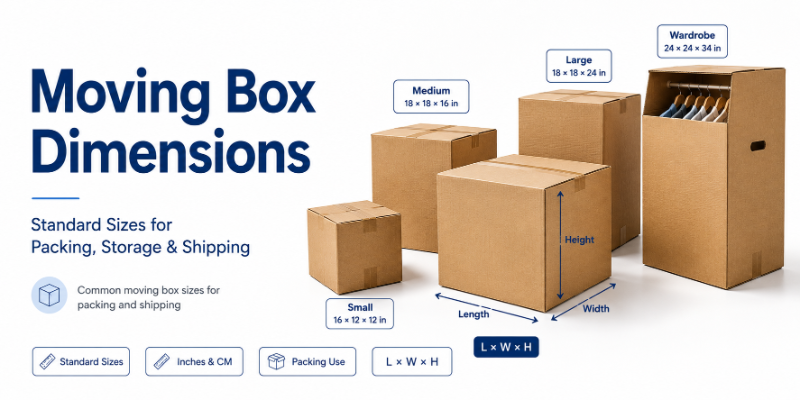
Standard moving box sizes generally fall into a few common categories:
- Small: 16 × 12 × 12 inches
- Medium: 18 × 18 × 16 inches
- Large: 18 × 18 × 24 inches
- Extra-large: 24 × 18 × 24 inches
- Wardrobe: around 24 × 24 × 34 inches
- Dish pack: around 18 × 18 × 28 inches
These figures are widely used across the moving industry, but exact dimensions vary by supplier, board strength, and manufacturing process. Always check the listed measurements before ordering in bulk.
What Are Moving Box Dimensions?
Moving box dimensions refer to a box’s length, width, and height — usually written as L × W × H. These numbers determine how much a box holds and how it behaves once packed, stacked, or loaded.
It helps to separate inner dimensions from outer dimensions. Inner dimensions tell you what will actually fit inside. Outer dimensions include wall thickness and matter for stacking, shelving, and freight calculations.
Moving Box Size Chart
| Box Type | Dimensions in Inches | Dimensions in CM | Approx. Volume | Best For | Packing Notes |
|---|---|---|---|---|---|
| Extra small moving box | 15 × 12 × 10 in | 38 × 30.5 × 25.4 cm | ~1 cu ft | Small dense items, hardware | Good for heavy, compact contents |
| Small moving box | 16 × 12 × 12 in | 40.6 × 30.5 × 30.5 cm | ~1.3 cu ft | Books, tools, canned goods | Easy to lift even when fully packed |
| Medium moving box | 18 × 18 × 16 in | 45.7 × 45.7 × 40.6 cm | ~3 cu ft | Kitchenware, toys, folded clothes | Most versatile all-purpose size |
| Large moving box | 18 × 18 × 24 in | 45.7 × 45.7 × 61 cm | ~4.5 cu ft | Bedding, pillows, lampshades | Avoid heavy or dense contents |
| Extra-large moving box | 24 × 18 × 24 in | 61 × 45.7 × 61 cm | ~6 cu ft | Bulky lightweight items | Best for soft goods, not dense items |
| 12 × 12 × 12 cube box | 12 × 12 × 12 in | 30.5 × 30.5 × 30.5 cm | ~1 cu ft | Small parcels, dense packing | Common shippable cube size |
| Wardrobe box | 24 × 24 × 34 in | 61 × 61 × 86 cm | ~11.3 cu ft | Hanging clothes | Use the hanging bar; don’t overload |
| Dish pack box | 18 × 18 × 28 in | 45.7 × 45.7 × 71 cm | ~5.25 cu ft | Fragile kitchenware, glassware | Use dividers and cushioning |
| File box | 12 × 10 × 15 in | 30.5 × 25.4 × 38 cm | ~1 cu ft | Documents, office files | Keep within a comfortable carry weight |
| Picture or mirror box | Adjustable, flat-profile | Adjustable, flat-profile | Varies | Framed art, mirrors, glass panels | Add corner protection and padding |
| Custom moving box | Made to order | Made to order | Varies | Specialty or branded needs | Ideal when standard sizes don’t fit |
A 24 × 24 × 24-inch cube box holds about 8 cubic feet — worth understanding on its own, covered further below.
Moving Box Dimensions in Inches
Inches are the default reference for US moving companies, packaging suppliers, storage providers, and retail box sellers. For example, small boxes often measure 16 × 12 × 12 inches, while medium boxes are commonly around 18 × 18 × 16 inches. Inches are also what most truck rental calculators and storage planners use.
Moving Box Dimensions in CM
Centimeters matter for international moves and metric-based packaging orders:
- 16 × 12 × 12 inches = 40.6 × 30.5 × 30.5 cm
- 18 × 18 × 16 inches = 45.7 × 45.7 × 40.6 cm
- 18 × 18 × 24 inches = 45.7 × 45.7 × 61 cm
A quick rule of thumb: multiply inches by 2.54 to get centimeters.
Moving Box Dimensions in MM
Millimeters show up in custom box manufacturing, print-ready dielines, and international packaging specs:
- 16 × 12 × 12 inches ≈ 406 × 305 × 305 mm
- 18 × 18 × 16 inches ≈ 457 × 457 × 406 mm
- 18 × 18 × 24 inches ≈ 457 × 457 × 610 mm
If you’re working with a manufacturer on a custom carton, mm is often the unit used on technical drawings.
Moving Box Dimensions in Feet
Feet help with truck loading, storage unit planning, and volume estimates:
- 12 inches = 1 foot
- 24 inches = 2 feet
- A 24 × 24 × 24-inch box equals 2 × 2 × 2 feet, or about 8 cubic feet
Thinking in feet makes it easier to picture how many boxes will fit in a truck bed or storage unit without constant conversions.
Standard Moving Box Sizes Explained
Small, medium, large, extra-large, wardrobe, dish pack, file, and mirror/picture boxes each serve a different purpose. Most moves use a mix of these rather than relying on just one or two sizes.
Small Moving Box Dimensions
A small moving box typically measures 16 × 12 × 12 inches. It’s built for dense, heavy contents — books, tools, canned goods, documents, and small kitchen items — and stays easy to lift even when fully packed.
Medium Moving Box Dimensions
Medium moving box dimensions usually run around 18 × 18 × 16 inches. This size handles kitchenware, toys, small appliances, folded clothes, and general household items, which is why it’s the one packers reach for most often.
Large Moving Box Dimensions
Large moving box dimensions are commonly 18 × 18 × 24 inches, suited to bedding, pillows, towels, and lampshades. Avoid filling these with heavy books or tools — the extra volume tempts overpacking, but dense contents make the box hard to lift and prone to bottom failure.
Extra Large and 24×24×24 Moving Boxes
Extra-large and cube-style boxes, including the 24×24×24 size, offer roughly 8 cubic feet of volume. The empty box may weigh only a few pounds, but that says nothing about packed weight — contents determine that entirely. A 24×24×24 box filled with dense items can quickly become unsafe to lift, so this size works best for lightweight, bulky goods like comforters or stuffed toys.
Can I Ship a 12×12×12 Box?
Generally, yes — as long as it meets the carrier’s weight limits, labeling requirements, and packing standards. This cube size is common for smaller shipments and moving-related parcels. Final cost still depends on actual weight, dimensional weight, destination, and the specific carrier’s rules, so it’s worth checking current guidelines before shipping.
Packing Box Sizes for Moving by Item Type
- Books and documents: Small or file boxes keep these dense items at a manageable weight.
- Kitchen items: Medium boxes suit everyday kitchenware; dish packs with dividers protect glassware.
- Clothes and bedding: Large boxes handle folded items; wardrobe boxes suit hanging garments.
- Electronics: Original packaging is ideal, or a medium-to-large box with extra cushioning.
- Fragile items: Dish pack or mirror/picture boxes with proper padding offer the best protection.
- Office supplies: Small to medium boxes suit binders, stationery, and small equipment.
- Bathroom and personal items: Small or medium boxes work well for these lightweight but numerous items.
- Home décor: Medium to large boxes suit most pieces; breakables need padded, fragile-labeled boxes.
Inner Dimensions vs Outer Dimensions
Inner dimensions determine what will actually fit inside a box. Outer dimensions matter for truck loading, storage shelving, and freight calculations, since they include wall thickness. Always confirm which measurement a supplier is listing before ordering in bulk.
How to Measure a Moving Box Correctly
- Measure length first
- Measure width second
- Measure height last
- Check inner dimensions for item fit
- Check outer dimensions for stacking and storage
- Leave room for padding
- Consider wall thickness, especially on double-wall boxes
- Confirm measurements before placing a bulk order
Why Moving Box Dimensions Matter
Correct sizing brings protection from shifting and impact, safer lifting through better weight distribution, sturdier stacking, easier storage unit planning, more efficient truck loading, less wasted space, and lower overall damage risk. Getting the size right early saves time and effort throughout the whole move.
Materials Used for Moving Boxes
- Corrugated cardboard
- Single-wall corrugated board
- Double-wall corrugated board
- Kraft board
- Recycled cardboard
- Heavy-duty cardboard
Fragile items and long-distance moves generally benefit from double-wall or heavy-duty board, while everyday household goods do fine with single-wall corrugated boxes.
Printing and Labeling Options for Moving Boxes
- Room labels
- Fragile labels
- This-side-up symbols
- Handle marks
- Box numbers
- Color-coded moving labels
- Custom printed moving boxes
- Company logo printing
Clear labeling helps movers identify rooms, fragile items, heavy cartons, and unpacking order more easily, especially during large home or office moves.
How to Choose the Right Moving Box Size
- Sort items by weight before packing
- Use small boxes for heavy items
- Use large boxes for lightweight, bulky items
- Choose medium boxes for general packing
- Use wardrobe boxes for hanging clothes
- Use dish packs for fragile kitchenware
- Leave space for cushioning material
- Avoid overpacking any box
- Choose stronger material for long-distance moves
- Compare supplier sizes before buying in bulk
Common Mistakes to Avoid
- Using only one box size for an entire move
- Packing heavy items into large boxes
- Ignoring box strength and wall thickness
- Forgetting cushioning for fragile goods
- Leaving too much empty space inside boxes
- Not labeling boxes by room or contents
- Mixing fragile and heavy items together
- Reusing weak, worn-out boxes
- Ignoring inner dimensions when checking fit
- Ordering bulk boxes without confirming measurements
Retail and storage suppliers, including home improvement stores and self-storage companies, may use slightly different dimensions, names, and prices than listed here — so compare size, strength, and capacity before buying.
Custom Moving Box Dimensions
Custom sizing makes sense when standard boxes don’t quite match the job — for moving companies, storage businesses, office relocation teams, ecommerce sellers, and anyone handling specialty or fragile items. Benefits include better item fit, less transit damage, improved stacking, branded presentation, and a more consistent packing process.
Custom Moving Boxes by Custom Boxes Lab
If standard sizes aren’t quite right for your packing needs, Custom Boxes Lab helps businesses design custom moving boxes with accurate dimensions, corrugated strength, branded printing, labeling options, heavy-duty structures, and storage-friendly designs.
Need moving boxes with accurate sizing and durable structure? Custom Boxes Lab can help you create custom moving boxes based on your item size, material strength, branding, and shipping needs.
Final Thoughts
Standard moving box sizes are a useful starting point, but the best choice ultimately depends on item weight, protection needs, storage space, truck loading, and personal packing style. A thoughtful mix of small, medium, large, and specialty cartons will almost always outperform relying on a single box size for everything.