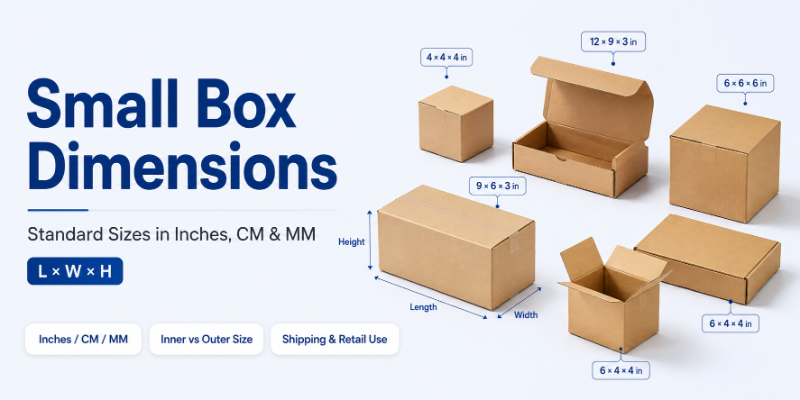
Choosing the right small box dimensions helps protect products, reduce shipping waste, control packaging costs, and improve presentation. A box that is too tight can damage the product, while an oversized box can increase filler use, shipping cost, and storage space.
There is no single universal small box size for every product. The best size depends on product shape, weight, material thickness, inserts, padding, dividers, wrapping, and shipping method. A jewelry box, cosmetic box, candle box, mailer box, and small shipping box may all need different measurements.
This small box size guide explains common small box dimensions in inches, cm, and mm, how to measure length, width, and height, and how to choose standard or custom small box dimensions for ecommerce, retail, and shipping.
What Are Small Box Dimensions?
Small box dimensions refer to the length × width × height of a box. These measurements show how much space the box provides and how well it will fit the product inside.
Length is usually the longest side of the box opening. Width is the shorter side of the opening. Height is the depth from the bottom to the top.
For example, a 6 × 4 × 4 inch box means:
- Length: 6 inches
- Width: 4 inches
- Height: 4 inches
It is also important to check inner and outer dimensions. Inner dimensions show usable space inside the box. Outer dimensions include material thickness and matter more for shipping, storage, and carrier calculations.
Standard Small Box Size Explained
A standard small box size usually means a common ready-made size used for shipping, ecommerce, retail packaging, or storage. These sizes are useful because they are easy to source, stack, label, and ship.
Common small box sizes include 4 × 4 × 4, 6 × 4 × 4, 6 × 6 × 6, 8 × 6 × 4, 9 × 6 × 3, 10 × 6 × 4, and 12 × 9 × 3 inches. These sizes work for many products, but they are not perfect for every item.
A standard size is a starting point. The final small packaging box size should always be based on actual product measurements, padding, inserts, and shipping needs.
Small Box Size Chart
| Box Type | Dimensions in Inches | Dimensions in CM | Best For | Packaging Notes |
|---|---|---|---|---|
| 4 × 4 × 4 small cube box | 4 × 4 × 4 | 10.16 × 10.16 × 10.16 | Mugs, jars, gifts | Compact cube shape |
| 6 × 4 × 4 small shipping box | 6 × 4 × 4 | 15.24 × 10.16 × 10.16 | Accessories, parts | Common ecommerce size |
| 6 × 6 × 6 small cardboard box | 6 × 6 × 6 | 15.24 × 15.24 × 15.24 | Candles, jars | Good for padded items |
| 8 × 6 × 4 small packaging box | 8 × 6 × 4 | 20.32 × 15.24 × 10.16 | Cosmetics, bundles | Useful retail size |
| 9 × 6 × 3 small mailer box | 9 × 6 × 3 | 22.86 × 15.24 × 7.62 | Mailer kits, samples | Flat and shipping-friendly |
| 10 × 6 × 4 small retail box | 10 × 6 × 4 | 25.4 × 15.24 × 10.16 | Product sets | More branding space |
| 12 × 9 × 3 flat small box | 12 × 9 × 3 | 30.48 × 22.86 × 7.62 | Apparel, documents, kits | Wide and easy to stack |
| Small jewelry box | Varies | Varies | Rings, earrings | Needs inserts or foam |
| Small cosmetic box | Varies | Varies | Creams, serums, lip products | Needs snug product fit |
| Custom small box | Custom | Custom | Specialty products | Best for exact sizing |
Small Box Dimensions in Inches
For US packaging and shipping, inches are the most common unit used for ecommerce boxes, shipping cartons, mailer boxes, and warehouse operations.Most US packaging suppliers list box measurements in inches.
For example, 8 × 6 × 4 inches is a practical size for cosmetics, small gifts, retail products, and ecommerce shipments. 9 × 6 × 3 inches is useful for flat mailer-style packaging, sample kits, and subscription products.
When ordering boxes in inches, confirm whether the listed measurement is inner or outer size. Inner size matters for product fit. Outer size matters for shipping labels, storage, freight, and dimensional weight.
Small Box Dimensions in CM
Small box dimensions in cm are useful for international packaging, printing, and manufacturing. Many overseas suppliers and production teams use metric measurements.
Simple conversions include:
- 4 inches = 10.16 cm
- 6 inches = 15.24 cm
- 8 inches = 20.32 cm
- 10 inches = 25.4 cm
- 12 inches = 30.48 cm
For example, a 6 × 4 × 4 inch box is 15.24 × 10.16 × 10.16 cm. An 8 × 6 × 4 inch box is 20.32 × 15.24 × 10.16 cm.
Centimeters help reduce confusion when working with global manufacturers, but brands should still approve the final dieline or sample before bulk production.
Small Box Dimensions in MM
Small box dimensions in mm are useful for precise printing, dielines, inserts, and manufacturing. Millimeters give more accurate measurements for packaging engineers and print teams.
For reference:
- 4 inches = 101.6 mm
- 6 inches = 152.4 mm
- 8 inches = 203.2 mm
- 10 inches = 254 mm
- 12 inches = 304.8 mm
A 6 × 4 × 4 inch small box equals 152.4 × 101.6 × 101.6 mm. A 9 × 6 × 3 inch mailer box equals 228.6 × 152.4 × 76.2 mm.
MM measurements are especially helpful when creating custom inserts, dividers, window cut-outs, and print-ready dielines.
Box Dimensions: Length, Width, and Height
Many buyers search for box dimensions length, width, and height because box measurement order can be confusing. The standard packaging order is:
Length × Width × Height
Length and width are measured across the box opening. Height is measured from the base to the top. For mailer boxes, height may also be called depth.
If you are measuring the product first, measure the longest side, then the shorter side, then the height. After that, add space for wrapping, inserts, tissue paper, bubble wrap, foam, or dividers.
Standard Carton Box Size in CM
For small box buyers, standard carton box size in CM is useful when comparing small, medium, and large packaging options before ordering.
| Box Category | Common Size in Inches | Approx Size in CM | Common Use |
|---|---|---|---|
| Small box | 6 × 4 × 4 | 15.24 × 10.16 × 10.16 | Small products and accessories |
| Small mailer | 9 × 6 × 3 | 22.86 × 15.24 × 7.62 | Flat ecommerce shipments |
| Medium box | 14 × 10 × 6 | 35.56 × 25.4 × 15.24 | Apparel, kits, bundles |
| Large box | 18 × 18 × 18 | 45.72 × 45.72 × 45.72 | Bulky items and storage |
This short comparison helps explain where small box dimensions sit compared with medium and large box dimensions in cm.
Small Shipping Box Dimensions
Small shipping box dimensions should be selected for product fit, padding space, box strength, shipping weight, dimensional weight, carrier requirements, damage prevention, and return shipping convenience.
A small shipping box should not be too tight because the product may crush against the walls. It should also not be too oversized because empty space increases movement, filler use, and shipping cost.
Fragile products may need corrugated boxes, inserts, dividers, bubble wrap, kraft paper, or tissue paper. Lightweight products may ship well in small mailer boxes or cardboard boxes with minimal filler.
Small Cardboard Box Dimensions
Small cardboard box dimensions depend on product purpose, material thickness, and box structure. A small cardboard retail box may use paperboard or cardstock, while a small shipping box may need corrugated board.
Corrugated board has flutes, which add thickness and strength. E-flute is often used for ecommerce and retail packaging because it gives a clean print surface with protection. B-flute is thicker and may be used when more strength is needed.
Material thickness affects inner and outer dimensions. Always check inner dimensions if the product must fit tightly inside the box.
Small Packaging Box Size by Product Type
Jewelry Boxes
Jewelry boxes are usually compact and need foam, velvet pads, inserts, or compartments. Rings, earrings, bracelets, and necklaces should not move inside the box.
Cosmetic Boxes
Cosmetic boxes need accurate sizing for jars, bottles, tubes, and lip products. A snug fit improves presentation and reduces damage.
Candle Boxes
Candle boxes should match jar diameter and height. A 4 × 4 × 4 or 6 × 6 × 6 box may work for many candles, but always measure the jar before selecting the box.
Soap Boxes
Soap boxes are usually small, lightweight, and simple. Kraft boxes, sleeve boxes, tuck boxes, and window boxes are common choices.
Electronics Boxes
Electronics boxes need space for cables, manuals, foam inserts, or dividers. Protection matters because movement can damage small devices.
Gift Boxes
Small gift boxes should balance product fit and premium presentation. Rigid board, inserts, ribbons, and branded tissue paper can improve unboxing.
Subscription Product Boxes
Small subscription boxes often hold multiple items. Flat sizes like 9 × 6 × 3 or 12 × 9 × 3 work well for samples and kits.
Food and Bakery Boxes
Food and bakery boxes need proper sizing, food-safe material, and ventilation where required. They are used for cookies, pastries, chocolates, and small treats.
How to Measure a Small Box Correctly
To measure a small box, follow this order:
- Measure length first
- Measure width second
- Measure height last
- Measure the product itself
- Add space for inserts, padding, or wrapping
- Check inner and outer dimensions
- Confirm the final size before ordering
- Request a sample if needed
A sample is helpful before bulk production because it confirms product fit, material strength, structure, and presentation.
Inner Dimensions vs Outer Dimensions
Inner dimensions show the usable space inside the box. These matter for product fit, inserts, padding, and dividers.
Outer dimensions show the full outside size of the box. These matter for shipping, storage, carrier pricing, palletizing, and freight calculations.
For custom small box dimensions, confirm both measurements before production.
Why Small Box Dimensions Matter for Shipping Costs
Wrong box sizing can increase shipping cost. Oversized boxes may trigger higher dimensional weight, require more filler, and reduce warehouse efficiency.
Compact packaging helps reduce empty space, keeps products stable, and supports better shipping performance. The right small shipping box dimensions can also make returns easier for ecommerce customers.
Why Small Box Dimensions Matter for Product Protection
Correct sizing protects products from shaking, dents, scratches, crushing, and breakage. A well-fitted box holds the product in place, while inserts and dividers keep items separated.
Fragile items may need corrugated protection, bubble wrap, molded inserts, foam, or tissue paper. Lightweight retail products may only need cardstock or paperboard. The box size and material should match the product risk.
Why Small Box Dimensions Matter for Branding
Box size affects customer perception. A small box that fits well feels professional and thoughtful. A loose box can feel wasteful, while a tight box can look poorly planned.
Good sizing improves unboxing, logo placement, label space, shelf display, and premium presentation. Branded packaging, custom printed boxes, inserts, and clean finishing can make a small product feel more valuable.
Materials Used for Small Boxes
Common materials include:
- Cardboard for retail and lightweight packaging
- Corrugated board for shipping and fragile products
- Kraft paperboard for natural and eco-conscious packaging
- Rigid board for luxury gifts and premium products
- Recycled paperboard for sustainable packaging goals
- Cardstock for cosmetics, soaps, and printed tuck boxes
The right material depends on product weight, shipping method, branding needs, and budget.
Printing and Finishing Options for Small Boxes
Small boxes can be customized with digital printing, offset printing, CMYK printing, and PMS color matching. Digital printing is good for short runs, while offset printing is useful for larger orders and consistent color.
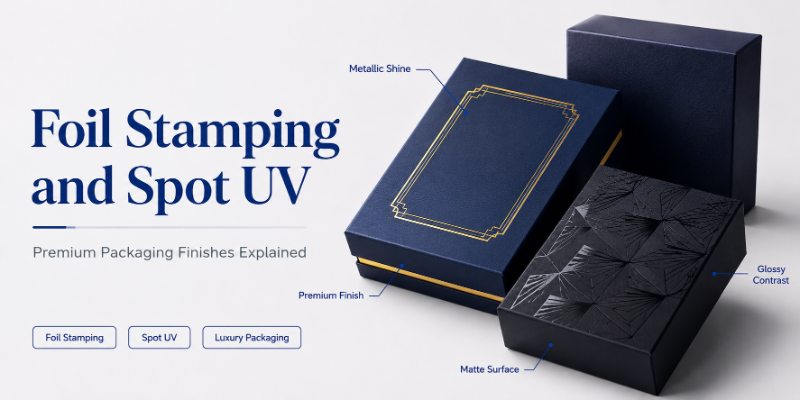
Finishing options include matte lamination, gloss lamination, soft-touch coating, Spot UV, foil stamping, embossing, debossing, window cut-outs, and custom inserts. These options improve shelf appeal, branding, and presentation.
How to Choose the Right Small Box Size
To choose the right size:
- Measure the product carefully
- Decide if the box is for shipping or retail
- Leave room for inserts and padding
- Avoid oversized packaging
- Consider material thickness
- Think about branding and label space
- Check carrier requirements
- Test the box before bulk production
The right small packaging box size should protect the item, reduce waste, and support a better customer experience.
Common Mistakes to Avoid
Avoid these mistakes:
- Guessing the box size
- Ignoring inner dimensions
- Choosing weak material
- Leaving too much empty space
- Forgetting padding or inserts
- Using one box size for every product
- Not considering shipping cost
- Overcrowding the design
- Ordering without a sample
- Not confirming final measurements
Even small measurement errors can affect product fit, shipping cost, and customer satisfaction.
Custom Small Box Dimensions
Custom small box dimensions are useful when standard sizes do not fit properly. They work well for luxury products, cosmetics, jewelry, candles, handmade goods, electronics, promotional items, subscription boxes, and ecommerce packaging.
Custom sizing helps improve product fit, reduce filler material, support branding, and create a cleaner presentation. It also allows brands to plan inserts, dividers, window cut-outs, labels, and printed artwork around the exact product.
Final Verdict
Small box dimensions are important because they affect product fit, shipping cost, protection, branding, and customer experience. However, standard small box sizes should only be used as starting points because the best size depends on product measurements, padding, inserts, material, shipping method, and presentation goals.
Before ordering, measure the product carefully. Then, check both inner and outer dimensions, allow enough space for protection, and confirm the final structure. As a result, your packaging will fit better, protect the product more effectively, and support a cleaner customer experience. The right box should feel practical, protective, and professional.
Custom Small Boxes by Custom Boxes Lab
Custom Boxes Lab helps businesses create custom small boxes with accurate dimensions, durable materials, branded printing, inserts, dividers, retail-ready layouts, ecommerce-friendly structures, and premium finishes.
Whether you need small shipping boxes, small cardboard boxes, tuck boxes, kraft boxes, mailer boxes, corrugated boxes, or custom printed boxes, packaging can be designed around your product size and business needs.
Need help choosing the right small box size? Custom Boxes Lab can help you create custom small boxes based on your product dimensions, material needs, and branding goals.