Quick Answer
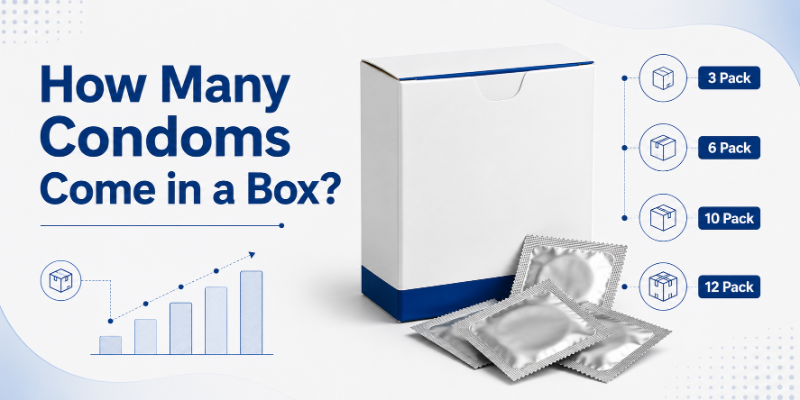
If you are wondering how many condoms come in a box, most retail boxes commonly include 3, 6, 10, 12, 24, or 36 condoms. Larger value packs and bulk condom packaging may contain 50 or 100 condoms, depending on the brand, product type, country, and packaging format.
There is no single universal condom box count. A small travel pack may contain only a few, while a wholesale, ecommerce, clinic, or institutional pack may include a much higher quantity. Buyers should always check the product label, expiry date, storage instructions, and manufacturer information before purchase or use.
From a packaging point of view, condom packaging count affects box size, structure, labeling space, retail presentation, privacy, shipping strength, and overall customer trust.
Common Condom Pack Quantities
Different brands use different condom pack sizes to match customer needs, retail channels, and price points. This guide explains the most common condom pack quantities in simple terms.
1-Count Packs
Brands usually use 1-count packs for samples, promotional campaigns, awareness programs, or single-unit distribution.It may come in a sleeve, pouch, or small carton rather than a full retail box.
3-Count Boxes
A 3-count box is one of the most common small retail formats. It is compact, affordable, and suitable for trial purchases, convenience stores, and travel-friendly packaging.
6-Count Boxes
A 6-count box offers a short-term supply while still keeping the packaging small. It gives brands enough space for basic branding, product count, and important label details.
10-Count Boxes
Retailers often consider a 10-count box a standard retail option. It works well for pharmacies, supermarkets, and ecommerce stores because it balances quantity, price, and shelf space.
12-Count Boxes
A 12-count box is another common multipack format. In addition, many brands use it because it feels familiar to buyers and gives slightly more value than smaller retail packs.
24-Count Boxes
Brands usually position a 24-count box as a value pack. It needs clear count labeling, stronger material, and a neat structure so the pack remains shelf-ready and easy to store.
36-Count Boxes
A 36-count box is a larger retail pack for value-focused buyers. Since the box is bigger, the design should make the condom box count easy to read from the front panel.
50-Count and 100-Count Boxes
Bulk buyers, clinics, institutions, distributors, and ecommerce sellers mostly choose 50-count and 100-count boxes. These packs focus more on quantity, storage, handling, and shipping durability than decorative shelf appeal.
Condom Packaging Count Chart
| Pack Count | Common Packaging Type | Best For | Packaging Notes |
|---|---|---|---|
| 1 condom | Sample pack or sleeve | Promotions and giveaways | Usually packed as a single wrapped unit |
| 3 condoms | Small retail box | Trial use and travel packs | Compact, affordable, and easy to display |
| 6 condoms | Short-term box | Personal use and small displays | Portable format with basic branding space |
| 10 condoms | Standard retail box | Pharmacies and ecommerce | Common standard condom pack size |
| 12 condoms | Multipack box | Repeat buyers and retail shelves | Balanced quantity with strong shelf appeal |
| 24 condoms | Value pack | Regular buyers and online stores | Needs stronger structure and clear labeling |
| 36 condoms | Large retail box | Value-focused customers | Requires more shelf and storage space |
| 50 condoms | Bulk box | Clinics and wholesale | Designed for storage and distribution |
| 100 condoms | Bulk supply box | Institutions and distributors | Built for quantity, handling, and shipping |
Why Condom Box Count Varies
Condom box count varies because brands do not sell to one type of buyer only. Brands create trial packs for customers who want a small, low-cost option. They design travel packs to stay compact and discreet. A retail shelf pack must look professional, fit store displays, and communicate the condom quantity in box packaging clearly.
Value packs usually contain more units because customers are comparing price and quantity. Variety packs may include different product options, which can affect the final count and box layout. Ecommerce packs must balance presentation with shipping protection, especially when boxes are sent in mailers or cartons.
Wholesale and institutional packs focus on larger condom packaging count options such as 50 or 100. These boxes are used for storage, organized supply, and distribution. Regional market standards also matter because a common pack size in one country may not be the most common format in another.
Packaging decisions for health-related products should always follow brand, retailer, and local labeling requirements.
Retail vs Bulk Condom Packaging
Retail condom packaging is designed for visibility, trust, and shelf performance. A retail box usually includes the brand name, product type, condoms per box, barcode, product information, expiry-related details, and required labeling. The design must be easy to read because shoppers often compare products quickly.
Retail boxes also need strong shelf appeal. Clean typography, clear count labels, good color contrast, and a professional layout help build confidence. Pharmacies, supermarkets, and convenience stores prefer packaging that stacks neatly, scans easily, and uses shelf space wisely.
Bulk condom packaging has a different purpose. It focuses on quantity, storage, distribution, and shipping strength. A 50-count or 100-count box may not need premium finishing, but it still needs accurate labeling, durable material, and practical packing structure.
For ecommerce brands, retail and bulk needs can overlap. The box must look good in product photos while also being strong enough to survive shipping and handling.
Condom Box Sizes and Packaging Design
Condom box sizes depend on more than the number of condoms inside. Each condom is usually packed in an individual protective wrapper before being placed inside the outer box. The size and stacking pattern of those wrappers directly affect the final carton dimensions.
Inserts or leaflets may also be included, which means extra internal space is needed. The box must also leave room for branding, product details, barcode placement, batch information, expiry date, storage instructions, and manufacturer information.
Material thickness changes the final size too. A small 3-count paperboard box can be slim and lightweight, while a 24-count, 36-count, or 100-count pack may need stronger cardstock or corrugated support.
Good packaging design is not only about appearance. It must protect the product, support retail display, keep information readable, and make the condom packaging count clear at first glance.
Materials Used for Condom Boxes
Most condom boxes use paper-based packaging because it is printable, lightweight, and cost-effective.
Paperboard is common for standard retail boxes. It is suitable for small and mid-size packs.
Cardstock offers a smoother, stronger feel and works well for branded retail packaging.
Kraft board gives a natural look and can support eco-conscious branding.
Rigid board is used for premium kits, special editions, or high-end private-label packaging.
Recyclable materials are popular for brands that want responsible packaging without losing professional presentation.
Corrugated support may be used for ecommerce shipping, wholesale cartons, or bulk condom packaging that needs extra strength.
Printing and Finishing Options for Condom Packaging
Printing helps condom boxes look professional and communicate clearly. CMYK printing is used for full-color designs, while PMS color matching helps maintain accurate brand colors.
Digital printing is useful for small runs, test packaging, and private-label launches. Offset printing is often preferred for larger orders because it gives sharp details and consistent color quality.
Finishing options can improve the look and feel of the box. Common choices include matte lamination, gloss lamination, and soft-touch coating. Brands can also use foil stamping, embossing, debossing, and Spot UV to highlight logos, product names, or key packaging details.
For health product packaging, the finish should support trust and readability. A clean layout is usually better than an overcrowded design.
How Brands Choose the Right Condom Box Count
Choosing the right condom box count depends on audience, price point, sales channel, and brand positioning. A new private-label brand may start with 3-count, 10-count, or 12-count boxes because these formats are familiar and easy to test in retail or ecommerce.
Pharmacies often prefer standard condom pack size options that are easy to display, restock, and scan. Clear front-panel information, barcode placement, and readable labeling are important.
Ecommerce sellers may choose 12-count, 24-count, or 36-count boxes because online buyers often compare value. However, the packaging must stay compact enough to control shipping costs.
Clinics, institutions, and wholesale suppliers usually prefer 50-count or 100-count packs. Their focus is storage, distribution, and easy identification rather than decorative retail display.
A brand should also consider how the box will be packed in shipping cartons, how many units fit per case, and whether the product needs discreet but professional presentation.
Mistakes to Avoid When Designing Condom Boxes
- Choosing a box that is too tight or too large for the product count
- Using weak material for larger or ecommerce packs
- Making the condom box count hard to find
- Overcrowding the design with too much text or graphics
- Using poor color contrast that reduces readability
- Leaving too little space for product information and barcode placement
- Ignoring expiry date, batch, storage, or manufacturer information areas
- Creating generic branding that does not build trust
- Forgetting how the box will sit, stack, or hang in retail displays
- Ignoring shipping durability for bulk or online orders
Custom Condom Boxes by Custom Boxes Lab
Custom Boxes Lab helps brands create custom condom boxes in different sizes, materials, prints, finishes, and pack-count formats. Whether a business needs small retail boxes, standard multipack cartons, private-label condom boxes, or bulk condom packaging, the design can be built around the exact product count and sales channel.
Custom packaging can include brand colors, product information, clear count labeling, barcode areas, retail-ready layouts, and durable material choices. The goal is to create packaging that protects the product, supports shelf presentation, and communicates trust through clean design.
Need custom condom boxes for retail, private-label, or bulk packaging? Custom Boxes Lab can help you create packaging based on your exact count, size, material, and branding needs.
Final Thoughts
So, how many condoms come in a box? Most boxes commonly contain 3, 6, 10, 12, 24, 36, 50, or 100 condoms, depending on the brand, product type, packaging format, and sales channel. Single-count packs are also used for samples and promotions.
There is no single universal condom box count. Retail packs are usually smaller and shelf-ready, while bulk packs focus on storage, quantity, and distribution. Buyers should always check the product label, expiry date, storage instructions, and manufacturer information before purchase or use.
For brands, the right condom quantity in box packaging should match customer needs, price point, display space, shipping method, and trust-building packaging design.